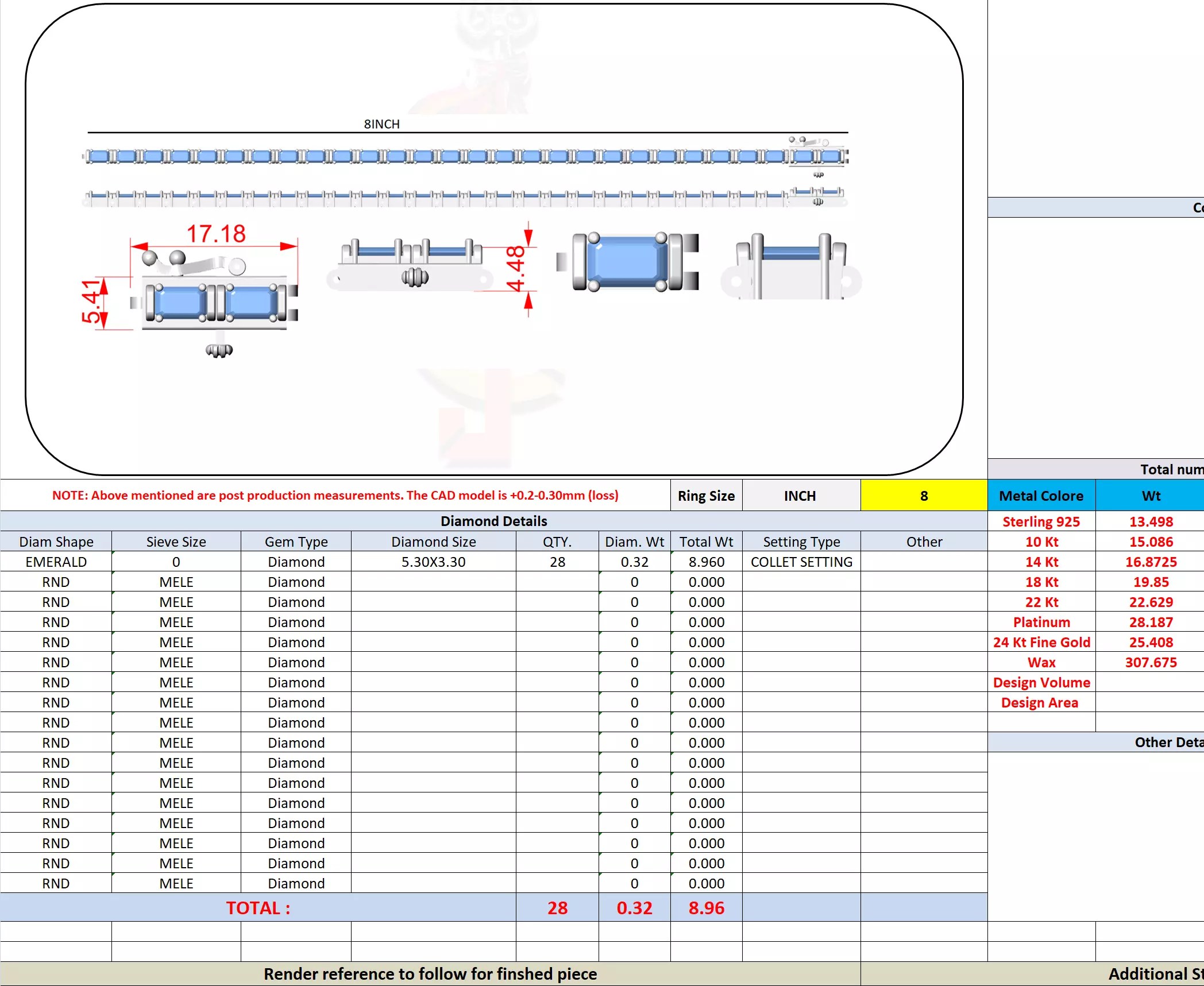
Outline & Topics Covered
- The Shift from Wax Carving to Digital CAD modeling
- Reviewing the Top Software Choices for Jewelry Design
- Organic Sculpting vs. Precision Engineering
- Prepping Models for Castable Wax Printers
- Conclusion
The Rise of Digital Jewelry Fabrication
Digital CAD modeling has completely transformed the traditional jewelry workshop. Skipping hand-carved wax molds in favor of 3D modeling and castable wax printing allows bench jewelers to deliver complex, symmetric, and structurally sound pieces in a fraction of the time.
Reviewing the Top Software Candidates
1. Rhinoceros 3D & MatrixGold (NURBS Standard)
The NURBS modeling technique is the industry gold standard. It utilizes exact mathematical surfaces to define lines, ensuring that stone seats and prongs are built to exact millimeters. Rhino jewelry design workflows and MatrixGold compatible files represent the pinnacle of this approach, offering the precision needed for stone-setting tolerances.
2. ZBrush & Blender (Subdivision/Mesh Sculpting)
For organic designs, such as animal figures, floral motifs, or relief carvings, precision NURBS software can be restrictive. Mesh-based sculptors like ZBrush and Blender allow artists to sculpt digital clay. The result is fluid and highly artistic, but requires careful thickness validation to ensure the design remains thick enough for molten metal flow.
Manufacturing & Casting Requirements
Regardless of the software you choose, your designs must be prepared for manufacturing. This means closing all surface gaps to create a solid "manifold" mesh (water-tight) and maintaining a minimum wall thickness of 0.8mm. Files in our jewelry CAD library are delivered as pre-tested STL meshes, fully checked for manifold integrity and ready to print.